Los Cabos — For years, the real estate story here was simple: prices went up, buyers kept coming, and luxury homes along the coast seemed almost immune to the gravity affecting other markets.
In 2026, that story is changing.
Not collapsing. Not reversing. But changing.
Across Los Cabos, a more complicated market is beginning to take shape. The destination remains one of Mexico’s most powerful luxury real estate markets, driven by American and Canadian buyers, direct flights, resort-style communities, and a global appetite for second homes that feel both private and lifestyle-driven. But the numbers now show a market that is becoming more selective, more price-sensitive, and less forgiving of homes that are overpriced, unfinished, poorly located, or competing in crowded segments.
In other words, Los Cabos is still expensive. But it is no longer untouchable.
According to Berkshire Hathaway HomeServices Baja Real Estate’s Q1 2026 market report, the average sale price across all property types in Los Cabos was $809,000 USD, while the average sale price for single-family homes reached $1.17 million USD. The report notes that the San José Corridor continues to command the highest average prices for homes, reflecting the enduring strength of the area’s luxury communities and ocean-oriented inventory.
But beneath those strong headline prices is a quieter shift.
Inventory has grown. Buyers have more choices. Homes are sitting longer. Sellers can no longer assume that a beautiful view, a Cabo address, and a premium price will be enough.
The same Berkshire Hathaway report describes the market as selective rather than broadly slow. Finished homes in established communities that are priced near real sold comparables are still moving, often close to list price. But land, speculative properties, and oversupplied inventory are taking longer to sell. In Q1 2026, home inventory ranged from 21.8 months under $1 million to 44.6 months over $1 million, a level that gives buyers more leverage and forces sellers to be more realistic.
That is the real news in Los Cabos real estate: the market is no longer rewarding every seller equally.
For buyers, this is the first time in years that the conversation has meaningfully shifted. During the post-pandemic boom, many buyers felt they had to move quickly, compete aggressively, and accept limited negotiation room. Now, in certain price points and property types, buyers can pause, compare, inspect, negotiate, and ask harder questions.
For sellers, the lesson is just as clear. The market still supports strong pricing, but only when the property justifies it.
A separate 2026 analysis from CaboRealEstate.com points to the same divide. In the condo market, inventory was up slightly, while units sold were down 31%. Yet average condo prices were up 42%, suggesting that fewer transactions are happening overall, but more of the closed sales are concentrated at the high end. The report described the luxury condo market as still active, while the mid-market has slowed.
The house market shows more obvious signs of pressure. The same report found house inventory up 14%, sold properties down 26%, total volume down 50%, and average price down 32%. It pointed to softer momentum in areas including the Cabo Corridor, Pacific side, and San José Corridor.
That does not mean the Los Cabos dream is fading. It means the dream is being priced more carefully.
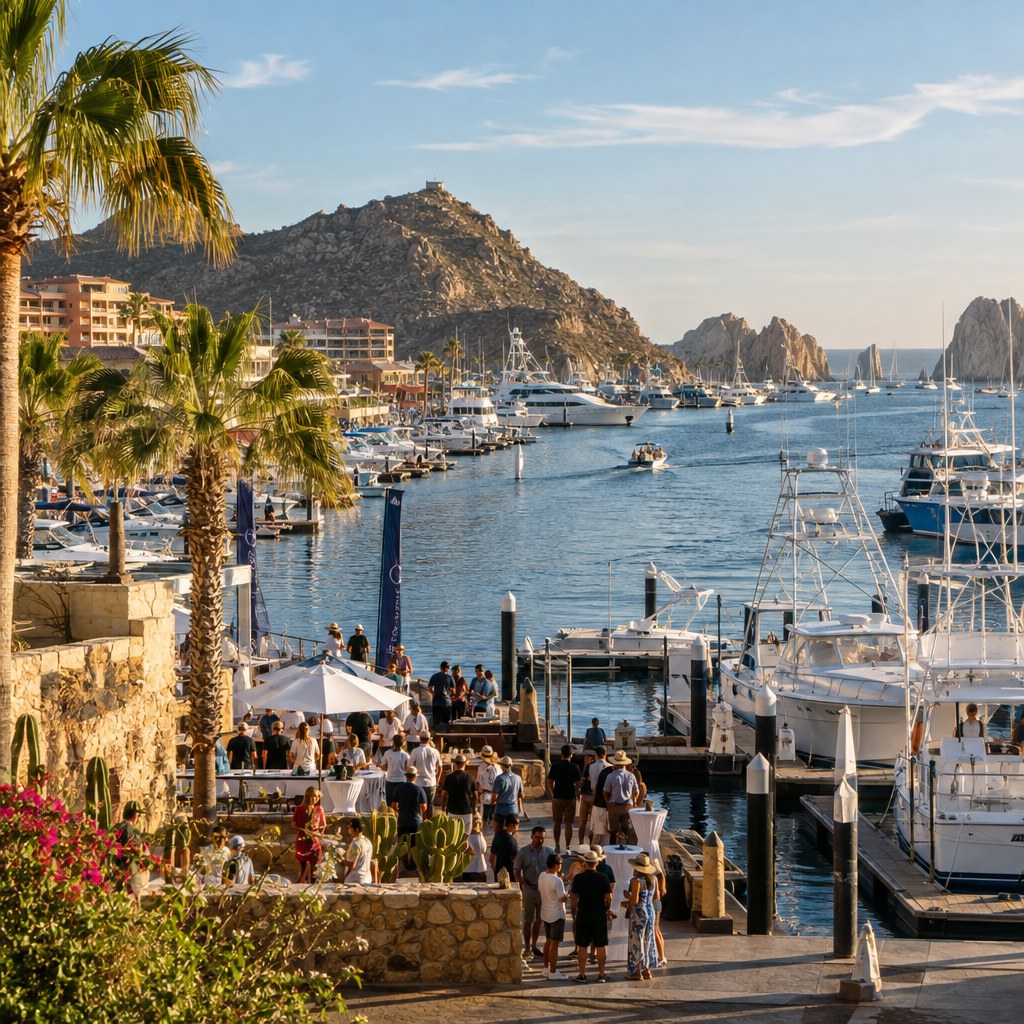
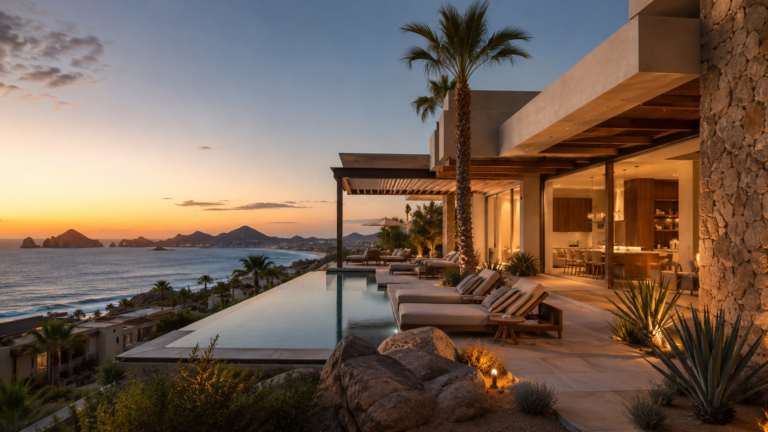
Luxury real estate here has always been tied to lifestyle. Buyers are not only buying bedrooms and square footage. They are buying proximity to golf, beach clubs, swimmable beaches, private security, restaurants, marinas, wellness amenities, concierge services, and the feeling that life can be easier, warmer, and more beautiful.
That emotional pull remains powerful.
But in 2026, emotion is being checked by math. Construction costs are high. Timelines can be long. Financing is limited. Insurance, maintenance, HOA fees, property management, rental rules, and furnishing costs all matter more than they did when the market felt unstoppable.
Land is one of the clearest examples. CaboRealEstate.com reported that land inventory was up 20%, while sold land was down 16%, total volume was down 45%, and average price was down 35%. The report noted that buyers are still interested in land, but construction costs, timelines, and limited financing are creating hesitation.
That hesitation is not irrational. In Los Cabos, buying land is not just a real estate decision. It is a construction project, a permitting process, a design challenge, a cost-control exercise, and often a long-distance management problem. For many buyers, a finished home in a proven community now feels safer than a blank lot with an uncertain timeline.
Still, the upper end of the market is not disappearing.
Cabo Real Estate Services reported that the $2 million to $5 million mid-luxury segment continues to show steady demand, even with longer days on market. The report cited 38 sales out of 300 active listings in that segment, while noting that realistic pricing and patience will be essential for sellers in 2026.
This is where Los Cabos differs from many other markets. The destination is not driven only by local salaries or traditional affordability. It is powered by international wealth, second-home demand, tourism, hospitality investment, and a lifestyle economy that stretches from private villas to beachfront resorts.
Tourism infrastructure continues to support that demand. Reuters reported that Grupo Aeroportuario del Pacífico announced a 52-billion-peso investment plan through 2029, including expansions at airports such as Los Cabos, with the goal of increasing capacity across its Mexican airports by 50%.
Hospitality investment is also reshaping the region. Cinco Días reported that Los Cabos attracts high-spending travelers, with tourism officials citing 3.8 million annual tourists and 2.2 million U.S. visitors. The same report noted continued interest from major hotel brands, including planned or recent projects from Hyatt, Marriott, St. Regis, and Hilton’s Conrad brand.
That matters because real estate follows hospitality.
When new luxury hotels, branded residences, golf communities, beach clubs, and resort amenities arrive, they do more than add rooms. They create confidence. They bring restaurants, service standards, international press, jobs, airport traffic, and a higher-spending visitor profile. Over time, that helps support property values — especially in master-planned communities and locations with strong lifestyle infrastructure.
But growth also brings tension.
Baja California Sur has raised its “Embrace It” tourist tax to MX$488 for international visitors in 2026, with revenue intended for conservation, tourism infrastructure, environmental protection, and community development. The policy applies to destinations including Los Cabos, Cabo San Lucas, La Paz, and Loreto.
That is a small fee for most luxury visitors, but it reflects a larger reality: Los Cabos is trying to manage growth, not just attract it. The destination is under pressure to protect beaches, water resources, infrastructure, public access, and local quality of life while continuing to welcome investment.
The next chapter of Los Cabos real estate will depend on that balance.
If the region can keep improving infrastructure, protecting natural assets, and maintaining a high-quality tourism experience, demand for luxury homes and vacation properties will likely remain strong. But if growth becomes too strained, too expensive, or too disconnected from local realities, the market could become more uneven.
For now, the message is clear.
Los Cabos is not a bargain market. It is not a distressed market. It is not a market where serious luxury buyers have disappeared.
It is a smarter market.
The easy boom has cooled. The careless pricing is being challenged. The best properties still command attention, but buyers are no longer treating every listing as rare. Sellers must prove value. Developers must understand community expectations. Investors must look beyond the postcard and study the numbers.
That may be healthier for Los Cabos in the long run.
Because a market built only on hype eventually runs out of room. A market built on lifestyle, quality, infrastructure, and disciplined pricing has a better chance of lasting.
In 2026, Los Cabos real estate is not losing its shine.
It is growing up.