By Mateo de la Garza | Luxury & Travel
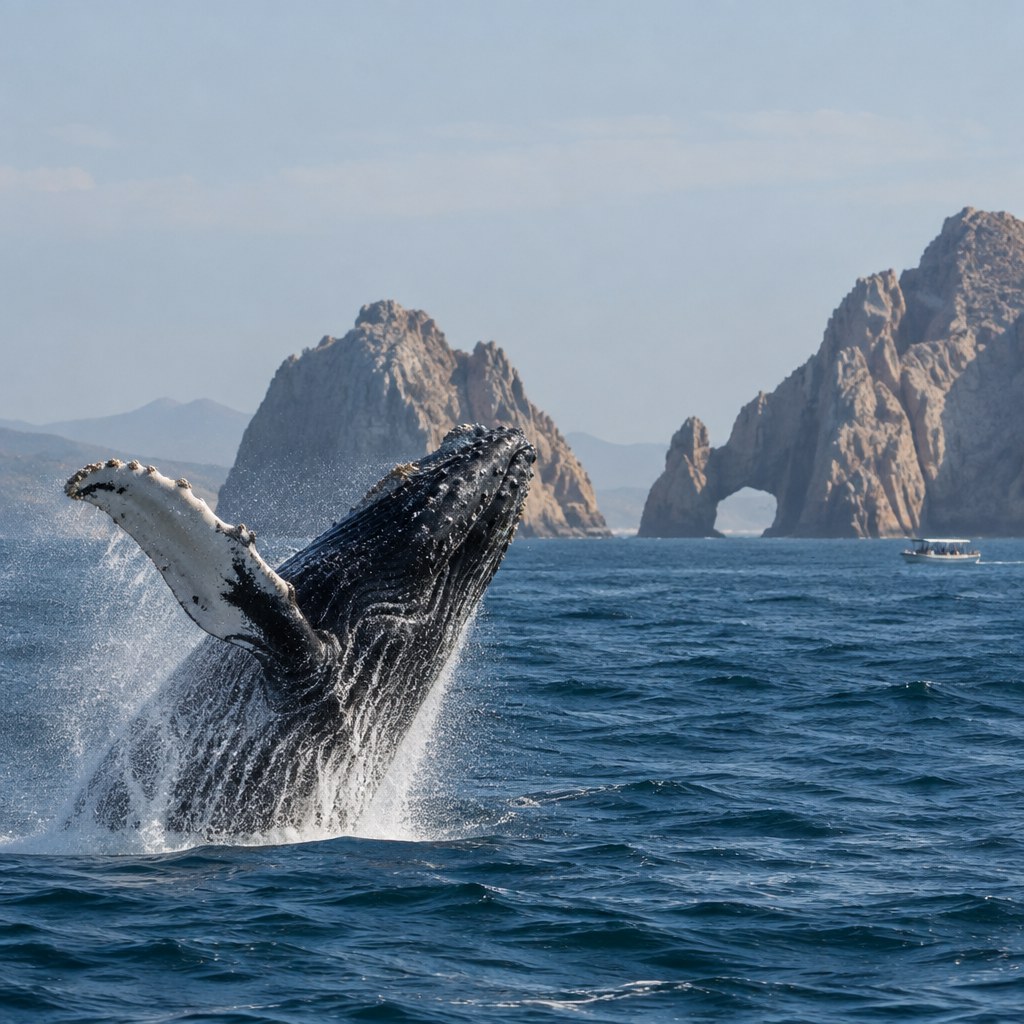
There are certain things in Los Cabos that never stop feeling extraordinary — even if you live here. Watching a humpback whale break the surface, throw its entire body into the air and disappear back into the Pacific is one of them.
For visitors, whale season is one of the great reasons to plan a winter trip. For locals, it is one of those reminders that this place is far more than beautiful hotels and beaches. Every year, the coastline becomes part of one of the world’s great wildlife migrations.
When is whale season in Los Cabos?
According to the Los Cabos Tourism Board, whale watching generally runs from December through April, with January through March considered the prime viewing period. Humpback and gray whales are among the species most commonly seen around Los Cabos, while blue, fin and even orca sightings are possible.
The whales travel thousands of miles from colder northern waters to the warmer waters around Baja California Sur, where they mate, give birth and nurse their calves. That is why winter mornings off Cabo can suddenly turn into something unforgettable: a mother and calf surfacing together, a tail disappearing beneath the water, or a full breach against the backdrop of Land’s End.
Where to see them
The Cabo San Lucas Marina is the main departure point for whale-watching excursions, with everything from small guided boats to catamarans and private yachts heading toward the Pacific and the waters around El Arco.
You do not always need to be on a boat, either. During peak season, whales can sometimes be spotted from beaches, oceanfront resorts and viewpoints along the Tourist Corridor. But getting out on the water with a responsible operator gives you the best chance to experience the scale, sound and movement up close.
Why everyone should do it at least once
It is easy to become accustomed to Cabo’s scenery. The ocean is always there. The sunsets are always beautiful. But seeing a whale in the wild has a way of resetting your sense of scale.
There is nothing staged about it. You wait, watch the horizon, and suddenly the ocean erupts.
Whether you are visiting Los Cabos for the first time or have lived here for years, whale watching deserves a place on the list. It is magnificent, unpredictable and completely connected to the natural world that makes Baja California Sur so special.
Before you go
- Season: December through April
- Best months: January through March
- Main departure point: Cabo San Lucas Marina
- Tip: Book early during peak winter travel periods and choose operators that follow Mexico’s whale-watching protections.
Source: Los Cabos Tourism Board — Whale Watching. Whale-watching activities in Mexico are regulated under NOM-131-SEMARNAT-2010.