By Carlos Mendoza | Breaking News
Friday, October 16, 2026
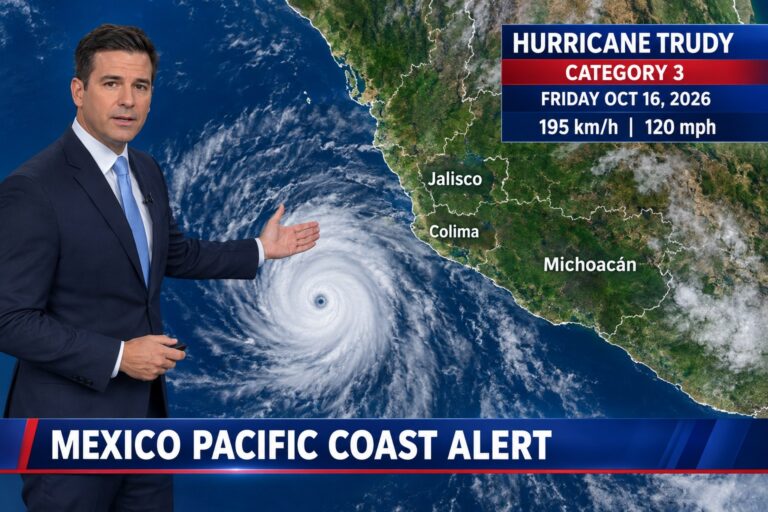
Hurricane Trudy has rapidly intensified into a Category 3 hurricane, with maximum sustained winds reported at 195 km/h (120 mph), raising concerns for communities along Mexico’s Pacific coast this weekend.
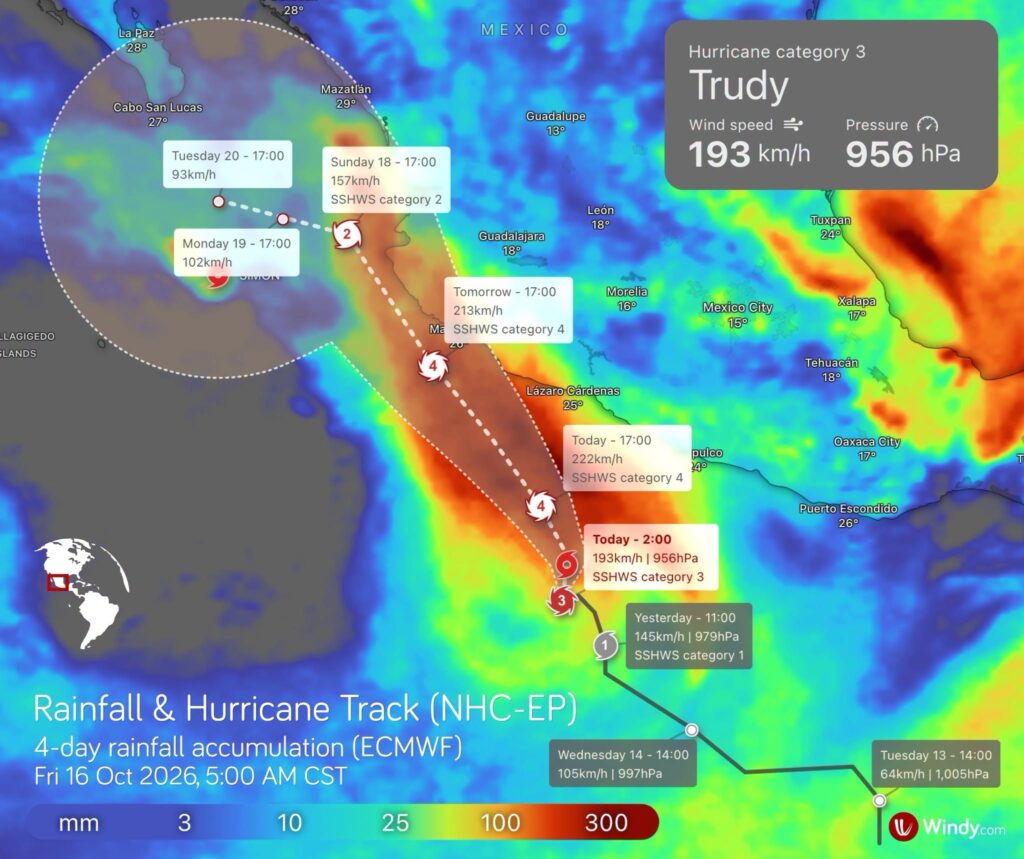
The storm is moving slowly northwestward and could strengthen further as it approaches the southwestern and west-central coast of Mexico. Current forecasts suggest Trudy’s center may remain offshore, but relatively small changes in its track could alter the severity of coastal impacts.
Where the greatest risks are
Michoacán, Colima and Jalisco are among the states facing potential heavy rainfall and coastal hazards. Residents should monitor local alerts because conditions can vary considerably by location, even when a hurricane’s eye stays over water.
Potential impacts
- Damaging winds in exposed coastal areas closest to the storm.
- Torrential rainfall that could cause flash flooding and dangerous road conditions.
- High surf and coastal flooding, with dangerous waves and possible storm surge.
- Landslides in steep or mountainous areas where soils become saturated.
What this means for Los Cabos
The immediate concern described in the current forecast is Mexico’s mainland Pacific coast, not Los Cabos. Nevertheless, travelers, mariners and residents of Baja California Sur should continue to monitor official forecasts for any changes to the track or marine conditions. A forecast is not a guarantee, and conditions can change as new advisories are issued.
Safety guidance
People in areas under official warnings should follow Protección Civil instructions, review evacuation routes if advised, avoid floodwater and coastal viewing areas, and keep essential supplies accessible. Visitors should check with their accommodation and transport providers for local instructions.
For the latest official storm position, warnings and forecast, consult the U.S. National Hurricane Center and Mexico’s Servicio Meteorológico Nacional.
Editor’s note: Hurricane intensity, track and local alerts can change rapidly. This report reflects the Category 3 update supplied for October 16 and should be refreshed against the latest official advisory before publication.