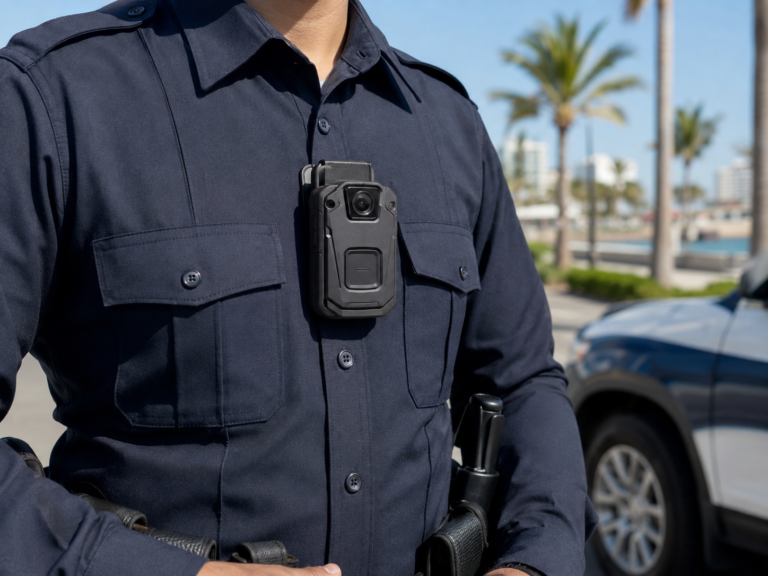
Municipal police and traffic officers in Los Cabos will gradually begin wearing body cameras as part of a new effort to increase transparency and document interactions with the public.
LOS CABOS, BCS — Police encounters in Los Cabos may soon be recorded from the officer’s point of view.
The Los Cabos municipal government announced that the Dirección General de Seguridad Pública, Policía Preventiva y Tránsito Municipal has acquired body-worn cameras that will be gradually assigned to operational officers.
According to José Antonio Galicia Mixquititla, head of the department, the cameras are expected to be used daily by preventive police and municipal traffic officers during their working shifts.
Why Los Cabos Is Adding Body Cameras
Municipal officials say the cameras are intended to create an objective record of police interactions and provide greater legal certainty for both citizens and officers.
Recorded footage could also be used to review complaints or disputes involving an officer’s conduct and assist with internal supervision. Authorities say the program is designed to strengthen accountability, transparency, respect for human rights and compliance with established police procedures.
For residents and visitors, the most noticeable change could come during interactions such as traffic-related encounters or other situations involving municipal police. As the rollout expands, more of those interactions may be documented on video.
What We Don’t Know Yet
The city has described the program as a gradual rollout, meaning not every police or traffic officer should be expected to have a camera immediately.
Officials have also not yet provided several operational details publicly, including the total number of cameras purchased, a timeline for equipping officers, how long recordings will be retained or how members of the public may request access to footage.
Those details will be worth watching as the program develops.
For a destination that welcomes millions of domestic and international visitors, the move represents another step toward increasing documentation and accountability during interactions between local authorities and the public.